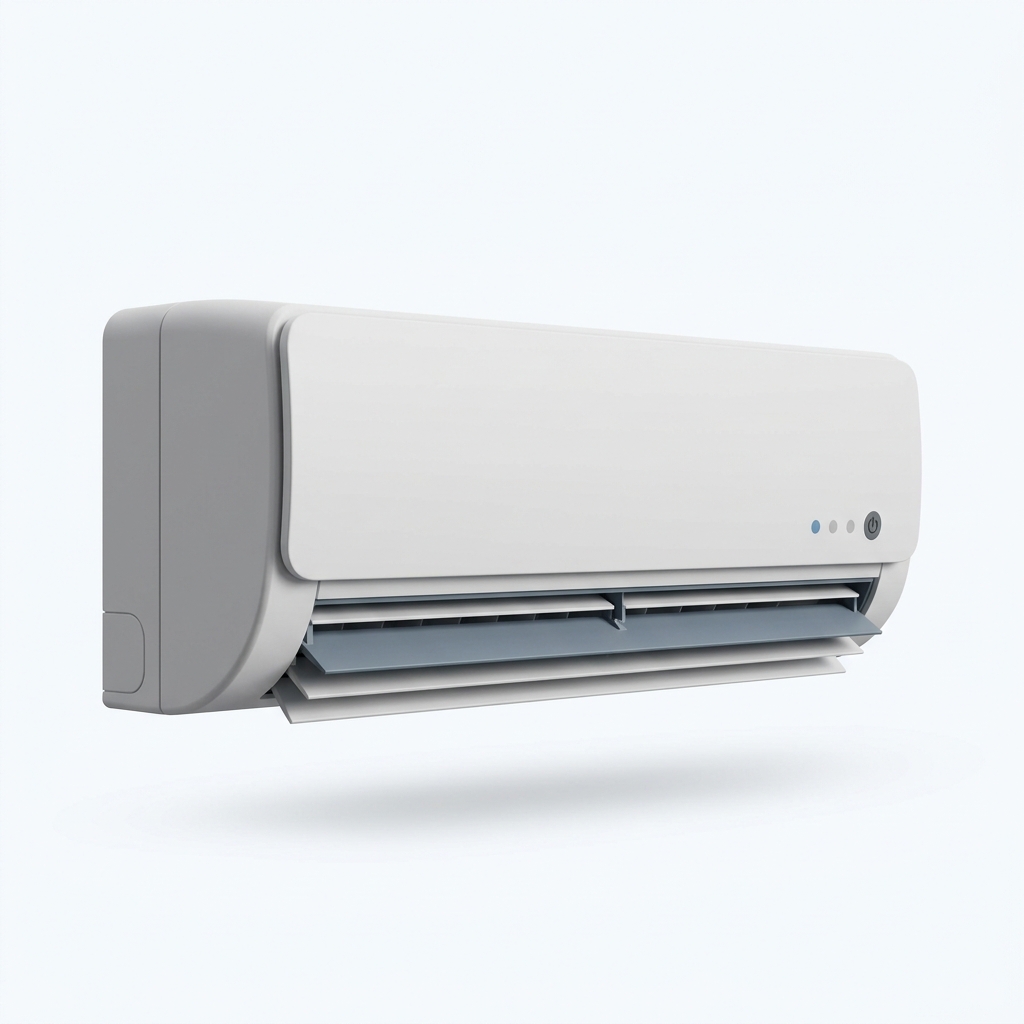
F11
How to Fix Panasonic Air Conditioner Error F11
Error F11 on Panasonic air conditioners indicates a communication failure between the indoor unit and outdoor unit. This is typically caused by loose or damaged wiring in the connecting cable, poor electrical contact at connectors, or intermittent power supply issues common during monsoon season or voltage fluctuations. The fix scope ranges from simple connector reseating to cable replacement.
Updated June 2026 · Cross-referenced with Panasonic service manual
Indian context
F11 communication errors are especially common in Mumbai, Pune, and Chennai during monsoon months when humidity and moisture ingress into connector terminals cause signal loss. In Bangalore and Hyderabad, hard water deposits on outdoor unit fins can cause voltage regulation issues that trigger intermittent F11 faults. Delhi NCR users frequently experience F11 during peak summer when voltage swings from 180V to 250V destabilize the communication protocol. Panasonic service centres in India often recommend cable inspection as the first step before any PCB diagnostics, as the inter-unit cable is the most common failure point in split AC systems operating in high-humidity zones.
What error F11 means
Error F11 on Panasonic air conditioners indicates a communication failure between the indoor unit and outdoor unit. This is typically caused by loose or damaged wiring in the connecting cable, poor electrical contact at connectors, or intermittent power supply issues common during monsoon season or voltage fluctuations. The fix scope ranges from simple connector reseating to cable replacement.
Why error F11 happens on a Panasonic Air Conditioner
On a Panasonic Air Conditioner, error F11typically resolves to one of three root-cause categories. They’re ordered cheapest-to-verify first — start at the top and only escalate if the first cause is ruled out.
- Mechanical: blockage, obstruction, or worn moving part. A common cause across Panasonic Air Conditioners in India — air filters clog and fan bearings and drain lines collect dust and sludge. Our step-by-step fix below targets this category first because it’s the cheapest to verify and resolvereports.
- Electrical: voltage spike, sensor fault, or PCB anomaly. India’s grid carries more voltage fluctuation than many appliance design tolerances assume, and a routine surge or sag can be enough to throw F11. If you’ve had recent voltage events (lights flickering, AC tripping), start your investigation here. A working stabilizer prevents this entire category.
- Software / configuration: stuck child-lock, demo-mode, or pending firmware reset.Less common but the cheapest fix when it applies — a 60-second factory reset clears it. We list this last because it’s rarely the actual cause, but check it before disassembling anything.
Safety first
Step-by-step fix
- 1
Step 1
Power off and unplug the unit
Switch off the AC using the remote or wall switch, then unplug the power cable from the socket. Wait 2 minutes for residual charge to dissipate.
- 2
Step 2
Locate the inter-unit connecting cable
Trace the cable running from the indoor unit to the outdoor unit. Check for visible cracks, cuts, exposed wires, or moisture inside the cable sheath, especially near wall penetrations.
- 3
Step 3
Inspect connector terminals for corrosion or moisture
At both the indoor and outdoor unit connection points, look for green or white deposits (corrosion) or water droplets on the connector pins. If present, gently dry with a lint-free cloth.
- 4
Step 4
Reseat both connectors firmly
Disconnect the cable connector at the indoor unit, wait 10 seconds, then reconnect it with a firm click. Repeat at the outdoor unit connector. Ensure no pins are bent.
- 5
Step 5
Check for voltage fluctuations
If you have a multimeter, measure the wall socket voltage. It should read 220V to 240V. Voltage below 200V or above 250V can cause communication errors; use a stabiliser if swings are frequent.
- 6
Step 6
Power on and test
Plug the unit back in and switch on. If F11 clears within 2 minutes, the issue is resolved. If F11 reappears within 10 minutes of normal operation, the cable or connectors need professional replacement.
When to call a technician
- • If F11 reappears within 10 minutes after power cycling and connector reseating.
- • If the inter-unit cable shows visible cracks, cuts, or exposed wires.
- • If voltage at your wall socket is consistently below 200V or above 250V, even after stabiliser installation.
Fixed it? Protect it next time. See an extended warranty plan for your Air Conditioner →
Common mistakes Panasonic Air Conditioner owners make with error F11
These six anti-patterns turn a routine 30-minute fix into a costly repair or warranty void. Read before starting.
- Forcing a stuck door, lid, or panel. Prising open a Panasonic Air Conditioner housing while it is in a fault state. Forcing it usually breaks the latch or sensor — turning a small part replacement into a full service call. If the door won’t open, run the safety-disconnect step first, then try again.
- Repeated unplug-and-replug as a “reset” ritual. Cycling power three or four times without diagnosing the underlying cause stresses the PCB and can convert a soft fault into a permanent firmware-corruption code. Reset once, observe whether the error returns immediately, then move to actual diagnosis if it does.
- Pouring water (or any liquid) into electronics-adjacent areas to flush a blockage.Even a small amount near the PCB or main wiring harness can cause permanent damage that voids warranty. The unit’s drainage paths exist for a reason; if a blockage isn’t cleared by the manual procedure, it isn’t getting cleared by improvisation either.
- Skipping the safety-disconnect step.“I’ll just check quickly” is the most expensive sentence in appliance repair. Working live on a 230V circuit (especially with a hot or wet appliance) carries real shock risk and instantly voids any warranty claim. Disconnect, wait two minutes for capacitor drain, then proceed.
- Buying counterfeit replacement parts on Amazon.in. Red flags: price below 60% of Panasonic authorised price, generic packaging without a model-compatibility list, seller name that doesn’t match a known Panasonic parts distributor, listings dated within the last 30 days with no reviews. Counterfeit parts often work for 2-3 weeks then fail with a different error, costing you double.
- Calling an “independent” technician for a warranty-covered unit. Indian appliances under Panasonic warranty must be serviced by authorised technicians or the warranty voids permanently. Even if the warranty is expired, third-party local technicians often replace working parts to inflate the bill — verify each part swap by asking to see the failure on the old part before they install the new one.
Preventing future F11 on your Panasonic Air Conditioner
The fix above resolves the current instance. These five maintenance habits prevent it from coming back, specific to Panasonic Air Conditioners in Indian operating conditions (hard water, voltage variability, monsoon humidity).
- Monthly: wash the air filters and clear the drain line. Hard-water deposits and everyday debris are a frequent cause of recurring F11 in India, and a few minutes each month is the cheapest way to avoid a repeat.
- Quarterly: descale water-touching components. Use food-grade citric acid or a Panasonic approved descaler for hard-water regions (Bangalore, Hyderabad, large parts of Maharashtra and Tamil Nadu). Skipping this in a hard-water zone shortens the life of the heating and water-touching parts.
- Run the unit through a working stabilizer. A mainline stabilizer sized for Air Conditioners is the cheapest protection against voltage-induced F11 occurrences. The MCB on your distribution board is not a substitute — it trips on overload, not on under-voltage or surge.
- Decide AMC vs DIY honestly. Compare the PanasonicAMC quote against what you have actually spent on service. If your unit is >5 years old and you’ve had two service calls in the last 18 months, an AMC usually pays for itself. Younger units with no service history: DIY plus stabilizer is cheaper.
- Watch monthly for early-warning signs. Unusual noise during a specific cycle phase, water spotting, mild burning smell — any of these means a service call within a week, not a wait-and-see month. Catching F11-precursor symptoms early turns a major repair into a routine maintenance visit.
If error F11 returns within 30 days of completing the fix above, escalate directly to Panasonicauthorised service — repeat patterns within a month indicate a deeper fault (worn bearing, failing PCB, leak that wasn’t fully identified) that surface-level repair won’t resolve. Document the dates and circumstances of each occurrence; the service centre will use this to prioritize root-cause investigation.
Frequently asked questions
Does F11 mean my AC compressor is broken?
No. F11 is a communication error, not a compressor fault. The compressor is likely fine; the issue is signal loss between units. Only if the error persists after cable inspection should you suspect internal PCB damage.
Why does F11 appear only during monsoon or after heavy rain?
Moisture enters connector terminals and cable joints during high humidity, causing intermittent electrical contact loss. This is very common in coastal cities. Ensure the outdoor unit drain is clear and cable entry points are sealed with weatherproof caulk.
Can I repair the inter-unit cable myself?
No. Splicing or patching AC communication cables can cause further faults or safety hazards. Always have Panasonic authorised service replace the cable; expect ₹1200 to ₹2000 for parts and labour.
Will F11 go away on its own?
Rarely. F11 indicates a persistent communication break. Temporary power cycling may mask it briefly, but the root cause (loose connector, damaged cable, or voltage instability) must be fixed to prevent recurrence.
People also ask
What does F11 mean on a Panasonic Air Conditioner?
Can I fix Panasonic Air Conditioner F11 error myself?
Why does my Panasonic Air Conditioner show F11?
How do I quickly fix F11 on my Panasonic Air Conditioner?
Related repair guides
Editor’s take
Error F11 on a Panasonic air conditioner is one of the more straightforward faults to diagnose and resolve at home. Most F11 cases stem from causes that a homeowner with basic tools can fix in under 30 minutes — no service call required. The 6-step process outlined above covers the most common root causes in order of likelihood, so you can work through them systematically rather than guessing. For Indian households, F11 has a seasonal pattern worth knowing. Hard-water mineral buildup accelerates through the dry winter months when municipal water TDS spikes, and then monsoon humidity compounds the problem by corroding connectors and seals that mineral deposits have already weakened. If you live in a hard-water zone — Bangalore, Hyderabad, Chennai, or parts of Maharashtra — and your Panasonic air conditioner throws F11 between July and October, the root cause is almost certainly corrosion-accelerated wear rather than a one-off mechanical fault. A quarterly descaling routine and silica gel packets near the electronics housing can prevent most repeat occurrences. The boundary between DIY and professional service is clear for F11: if you have completed all 6 steps above and the error persists, or if the error returns within 48 hours of a successful fix, you are dealing with an internal component issue. The most common professional-service causes are If F11 reappears within 10 minutes after power cycling and connector reseating.; If the inter-unit cable shows visible cracks, cuts, or exposed wires.. For units under warranty, always use Panasonic's authorised service network — an independent technician's intervention, even a successful one, can void your warranty claim on future unrelated issues. For out-of-warranty units, get quotes from both Panasonic authorised and a reputable independent technician; independent rates are usually lower, and for F11 specifically, the repair quality is comparable either way.
All Panasonic Air Conditioner error codes
Every Panasonic air conditioner fault we cover. Browse the full Panasonic air conditioner hub or all Panasonic guides.