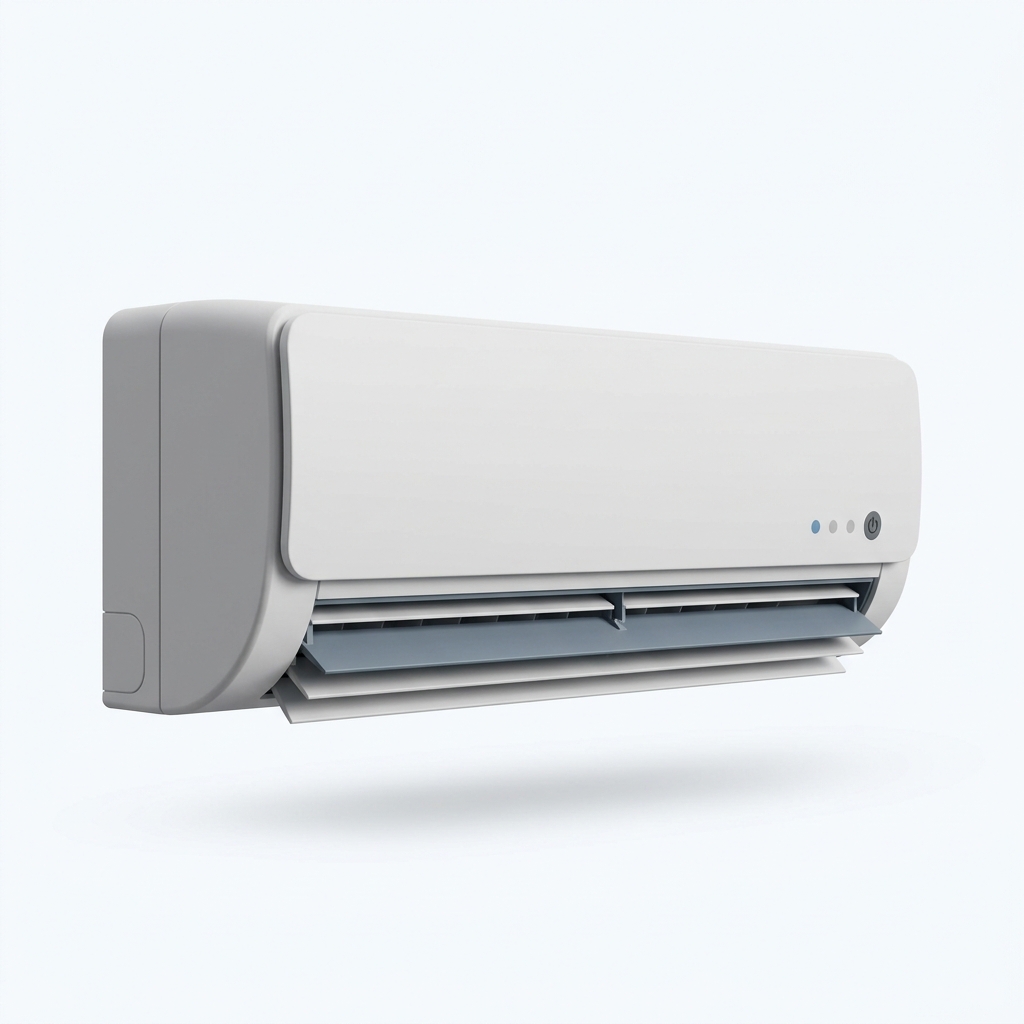
E101
How to Fix Samsung Air Conditioner Error E101
Error E101 on a Samsung air conditioner indicates the indoor unit's PCB has not received any data from the outdoor unit for the timeout period (typically 4 minutes). The outdoor unit may have lost power, the communication wire may be cut or grounded, or the outdoor PCB itself may have failed. E101 is a more specific form of communication error than C5; it suggests the outdoor unit is not even attempting to talk back. Cooling stops entirely and the indoor display flashes E101.
Updated June 2026 · Cross-referenced with Samsung service manual
Indian context
E101 errors peak during and immediately after Indian monsoon when outdoor units have absorbed humidity for weeks. Mumbai, Chennai, Goa, Vizag coastal regions see 40 to 60 percent more E101 callouts than dry Delhi or Bangalore. Samsung India authorised service charges ₹450 to ₹700 for diagnosis; outdoor PCB replacement ₹4500 to ₹7500 total with 6-month warranty. Voltage instability in Delhi NCR, rural Tamil Nadu, parts of Bihar and UP causes earlier outdoor PCB failure within 4 to 6 years versus 7 plus years in stable-power Mumbai. A 4 kVA voltage stabiliser at ₹2500 to ₹4500 is essential in these regions. Outdoor unit rubber gaskets should be replaced every 4 years for ₹200 to ₹400 to prevent water ingress that damages PCBs. Crawford Market Mumbai aftermarket PCBs cost ₹1800 to ₹2800 but typically last 2 to 3 years versus 6 plus years for genuine Samsung parts.
What error E101 means
Error E101 on a Samsung air conditioner indicates the indoor unit's PCB has not received any data from the outdoor unit for the timeout period (typically 4 minutes). The outdoor unit may have lost power, the communication wire may be cut or grounded, or the outdoor PCB itself may have failed. E101 is a more specific form of communication error than C5; it suggests the outdoor unit is not even attempting to talk back. Cooling stops entirely and the indoor display flashes E101.
Why error E101 happens on a Samsung Air Conditioner
On a Samsung Air Conditioner, error E101typically resolves to one of three root-cause categories. They’re ordered cheapest-to-verify first — start at the top and only escalate if the first cause is ruled out.
- Mechanical: blockage, obstruction, or worn moving part. A common cause across Samsung Air Conditioners in India — air filters clog and fan bearings and drain lines collect dust and sludge. Our step-by-step fix below targets this category first because it’s the cheapest to verify and resolvereports.
- Electrical: voltage spike, sensor fault, or PCB anomaly. India’s grid carries more voltage fluctuation than many appliance design tolerances assume, and a routine surge or sag can be enough to throw E101. If you’ve had recent voltage events (lights flickering, AC tripping), start your investigation here. A working stabilizer prevents this entire category.
- Software / configuration: stuck child-lock, demo-mode, or pending firmware reset.Less common but the cheapest fix when it applies — a 60-second factory reset clears it. We list this last because it’s rarely the actual cause, but check it before disassembling anything.
Safety first
Step-by-step fix
- 1
Step 1
Hard reset both indoor and outdoor
Switch off everything: remote, wall switch, and any separate outdoor unit MCB. Leave off for 10 minutes minimum. Switch back on in this order: outdoor MCB, wall switch, then remote on Cool mode at 24 degrees. Wait 90 seconds for the indoor and outdoor PCBs to complete their handshake. If E101 does not return within 5 minutes, the fix held.
- 2
Step 2
Verify outdoor unit has power
Stand near the outdoor unit and listen. After AC is switched on, you should hear a soft fan sound within 60 seconds and a deeper compressor hum within 90 seconds. Total silence means the outdoor unit has no power. Check the outdoor MCB; many Indian homes wire ACs through a separate 16A MCB. A tripped MCB cuts power entirely without indoor warning.
- 3
Step 3
Check outdoor terminal voltage
Switch off the wall MCB. Open the outdoor unit terminal cover. Use a multimeter on AC voltage setting; with the wall switch back on, measure between live and neutral terminals. Reading should be 220 to 240 V. Below 180 V, the outdoor PCB cannot start; this points to a wiring break between indoor and outdoor or a tripped breaker upstream.
- 4
Step 4
Inspect the communication wire continuity
Switch off MCB. Disconnect the communication wire (usually colour-coded, often white or yellow) at both ends. Set multimeter to continuity beep mode. Touch one probe to one end of the wire and the other probe to the matching end. A working wire beeps continuously. No beep means the wire is broken inside its insulation, often from rat damage in concealed sections.
- 5
Step 5
Examine outdoor PCB
With the outdoor unit cover off and MCB switched off, look at the outdoor PCB. Healthy boards have no darkened, melted, or scorched areas. Any visible damage, burnt resistors, or melted plastic indicates the board has failed and must be replaced. Take a clear photo for the technician; this speeds parts ordering.
- 6
Step 6
Book authorised service
If wiring is intact and outdoor PCB shows no visible damage, internal component failure is likely. Call Samsung India on 1800-5-7267864. Expect ₹450 to ₹700 home visit. Outdoor PCB replacement runs ₹3500 to ₹6500 plus ₹600 labour. Indoor PCB ₹2500 to ₹4500. Total typical bill ₹4500 to ₹7500 for OEM parts with 6-month warranty.
When to call a technician
- • E101 returns within minutes of every reset, indicating PCB or internal component failure.
- • Outdoor unit is silent and outdoor MCB trips repeatedly; serious electrical fault requires immediate technician.
- • Visible water damage or rust on outdoor PCB seen through vent slots.
Fixed it? Protect it next time. See an extended warranty plan for your Air Conditioner →
Common mistakes Samsung Air Conditioner owners make with error E101
These six anti-patterns turn a routine 30-minute fix into a costly repair or warranty void. Read before starting.
- Forcing a stuck door, lid, or panel. Prising open a Samsung Air Conditioner housing while it is in a fault state. Forcing it usually breaks the latch or sensor — turning a small part replacement into a full service call. If the door won’t open, run the safety-disconnect step first, then try again.
- Repeated unplug-and-replug as a “reset” ritual. Cycling power three or four times without diagnosing the underlying cause stresses the PCB and can convert a soft fault into a permanent firmware-corruption code. Reset once, observe whether the error returns immediately, then move to actual diagnosis if it does.
- Pouring water (or any liquid) into electronics-adjacent areas to flush a blockage.Even a small amount near the PCB or main wiring harness can cause permanent damage that voids warranty. The unit’s drainage paths exist for a reason; if a blockage isn’t cleared by the manual procedure, it isn’t getting cleared by improvisation either.
- Skipping the safety-disconnect step.“I’ll just check quickly” is the most expensive sentence in appliance repair. Working live on a 230V circuit (especially with a hot or wet appliance) carries real shock risk and instantly voids any warranty claim. Disconnect, wait two minutes for capacitor drain, then proceed.
- Buying counterfeit replacement parts on Amazon.in. Red flags: price below 60% of Samsung authorised price, generic packaging without a model-compatibility list, seller name that doesn’t match a known Samsung parts distributor, listings dated within the last 30 days with no reviews. Counterfeit parts often work for 2-3 weeks then fail with a different error, costing you double.
- Calling an “independent” technician for a warranty-covered unit. Indian appliances under Samsung warranty must be serviced by authorised technicians or the warranty voids permanently. Even if the warranty is expired, third-party local technicians often replace working parts to inflate the bill — verify each part swap by asking to see the failure on the old part before they install the new one.
Preventing future E101 on your Samsung Air Conditioner
The fix above resolves the current instance. These five maintenance habits prevent it from coming back, specific to Samsung Air Conditioners in Indian operating conditions (hard water, voltage variability, monsoon humidity).
- Monthly: wash the air filters and clear the drain line. Hard-water deposits and everyday debris are a frequent cause of recurring E101 in India, and a few minutes each month is the cheapest way to avoid a repeat.
- Quarterly: descale water-touching components. Use food-grade citric acid or a Samsung approved descaler for hard-water regions (Bangalore, Hyderabad, large parts of Maharashtra and Tamil Nadu). Skipping this in a hard-water zone shortens the life of the heating and water-touching parts.
- Run the unit through a working stabilizer. A mainline stabilizer sized for Air Conditioners is the cheapest protection against voltage-induced E101 occurrences. The MCB on your distribution board is not a substitute — it trips on overload, not on under-voltage or surge.
- Decide AMC vs DIY honestly. Compare the SamsungAMC quote against what you have actually spent on service. If your unit is >5 years old and you’ve had two service calls in the last 18 months, an AMC usually pays for itself. Younger units with no service history: DIY plus stabilizer is cheaper.
- Watch monthly for early-warning signs. Unusual noise during a specific cycle phase, water spotting, mild burning smell — any of these means a service call within a week, not a wait-and-see month. Catching E101-precursor symptoms early turns a major repair into a routine maintenance visit.
If error E101 returns within 30 days of completing the fix above, escalate directly to Samsungauthorised service — repeat patterns within a month indicate a deeper fault (worn bearing, failing PCB, leak that wasn’t fully identified) that surface-level repair won’t resolve. Document the dates and circumstances of each occurrence; the service centre will use this to prioritize root-cause investigation.
Frequently asked questions
How is E101 different from C5 on Samsung AC?
Both indicate communication faults between indoor and outdoor units, but E101 is a stricter timeout: the indoor PCB has heard absolutely nothing from outdoor for over 4 minutes. C5 is a generic communication error that may include intermittent or partial signals. Diagnostically they are similar; check wiring, voltage, and PCB health. E101 more often points to outdoor PCB failure than C5.
Why does E101 appear after monsoon?
Monsoon humidity in Mumbai, Chennai, Goa, Kolkata corrodes outdoor terminal screws and PCB connectors faster than dry climates. Cumulative damage over 3 to 5 monsoons triggers E101. Outdoor unit covers should be inspected for water ingress: rubber gaskets aged 4 plus years often fail, letting rain reach the PCB. Replace gaskets every 4 years preventively for ₹200 to ₹400.
Can a tripped MCB cause E101?
Yes. If your AC has a separate outdoor MCB and it trips during a power fluctuation, the indoor unit sees no response from outdoor and shows E101. Reset the outdoor MCB. If it trips again immediately, the outdoor unit has a short circuit (most likely compressor or capacitor) and needs technician diagnosis. Do not repeatedly reset a tripping MCB; this can cause fire.
How much does Samsung E101 repair cost in India?
Best case: outdoor MCB reset, no charge. Cable repair: ₹450 service plus ₹40 to ₹60 per metre, total ₹900 to ₹1500. Outdoor PCB replacement: ₹3500 to ₹6500 plus ₹600 labour, total ₹4500 to ₹7500. Capacitor or relay replacement (sometimes the actual culprit): ₹500 to ₹900 plus labour. Insist on detailed diagnosis before approving expensive PCB replacement.
People also ask
What does E101 mean on a Samsung Air Conditioner?
Can I fix Samsung Air Conditioner E101 error myself?
Why does my Samsung Air Conditioner show E101?
How do I quickly fix E101 on my Samsung Air Conditioner?
Related repair guides
Editor’s take
Error E101 on a Samsung air conditioner sits in a middle ground between easy DIY fix and professional service territory. About half the time, the cause is something you can resolve at home with the steps above. The other half involves component-level issues — a failing sensor, a worn motor bearing, or a PCB fault — that require replacement parts and technical skill beyond basic troubleshooting. We recommend working through all 6 steps before calling for service, but set a mental time limit: if you have spent more than 75 minutes without progress, the issue is likely in the professional-service category. Indian power grid conditions play a significant role in E101 on Samsung air conditioners. Voltage fluctuations — particularly the under-voltage dips common in Delhi NCR, parts of UP, and tier-2 cities during peak summer load — can trigger E101 even on a mechanically healthy unit. A dedicated stabilizer rated for your air conditioner removes this category of false E101 triggers. The MCB on your electrical panel does not protect against under-voltage; it only trips on overload. If E101 appears after power cuts or during evening peak hours, voltage is your primary suspect. The boundary between DIY and professional service is clear for E101: if you have completed all 6 steps above and the error persists, or if the error returns within 48 hours of a successful fix, you are dealing with an internal component issue. The most common professional-service causes are E101 returns within minutes of every reset, indicating PCB or internal component failure.; Outdoor unit is silent and outdoor MCB trips repeatedly; serious electrical fault requires immediate technician.. For units under warranty, always use Samsung's authorised service network — an independent technician's intervention, even a successful one, can void your warranty claim on future unrelated issues. For out-of-warranty units, get quotes from both Samsung authorised and a reputable independent technician; independent rates are usually lower, and for E101 specifically, the repair quality is comparable either way.
All Samsung Air Conditioner error codes
Every Samsung air conditioner fault we cover. Browse the full Samsung air conditioner hub or all Samsung guides.