E2
How to Fix Carrier Air Conditioner Error E2
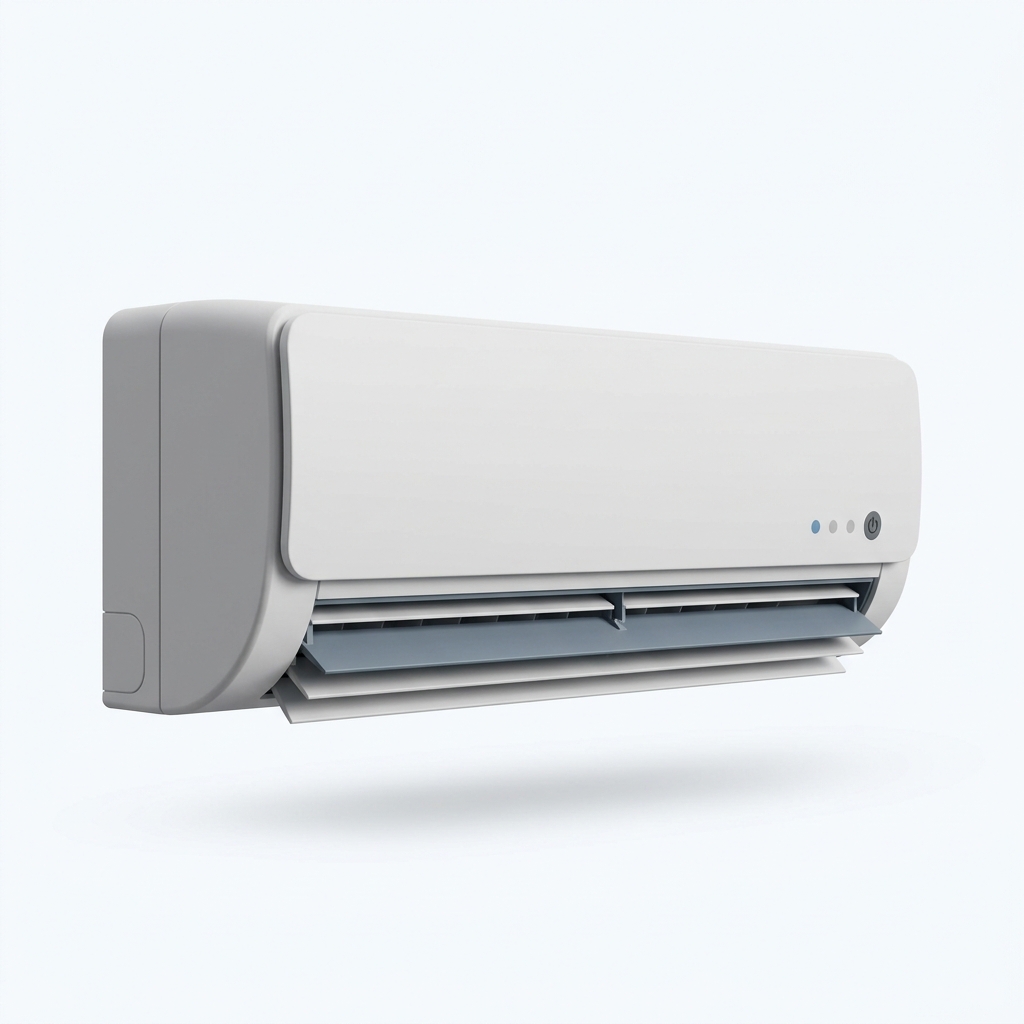
Error E2 on a Carrier split AC indicates a fault with the indoor evaporator (coil) temperature sensor. This thermistor is clipped directly onto the evaporator fins and measures coil temperature to prevent ice formation and detect refrigerant issues. When E2 appears, the PCB cannot monitor the coil and may stop the compressor to prevent freeze-up damage, resulting in fan-only operation or a complete shutdown.
Updated June 2026 · Cross-referenced with Carrier service manual
Indian context
E2 errors on Carrier ACs spike sharply during April–June in North India, when ACs run 14–18 hours a day and filter cleaning is neglected. Cities like Delhi, Lucknow, Agra, and Jaipur have exceptionally high ambient dust, which clogs indoor coils in 3–4 weeks of continuous operation. Pre-monsoon servicing is the single most effective preventive measure. In coastal West Bengal and Odisha, the monsoon adds biological growth (mold, algae) to the evaporator fins, which both blocks airflow and degrades the sensor clip's thermal contact. Carrier India's authorised network covers all 4 metro cities and most tier-2 cities; service appointments can be made via carrierindia.com or the Carrier Home app. Refrigerant top-ups cost ₹1500–₹3000 depending on gas type (R32 or R410A) and charge volume. Annual coil cleaning is ₹600–₹1200 at authorised centres.
What error E2 means
Error E2 on a Carrier split AC indicates a fault with the indoor evaporator (coil) temperature sensor. This thermistor is clipped directly onto the evaporator fins and measures coil temperature to prevent ice formation and detect refrigerant issues. When E2 appears, the PCB cannot monitor the coil and may stop the compressor to prevent freeze-up damage, resulting in fan-only operation or a complete shutdown.
Why error E2 happens on a Carrier Air Conditioner
On a Carrier Air Conditioner, error E2typically resolves to one of three root-cause categories. They’re ordered cheapest-to-verify first — start at the top and only escalate if the first cause is ruled out.
- Mechanical: blockage, obstruction, or worn moving part. A common cause across Carrier Air Conditioners in India — air filters clog and fan bearings and drain lines collect dust and sludge. Our step-by-step fix below targets this category first because it’s the cheapest to verify and resolvereports.
- Electrical: voltage spike, sensor fault, or PCB anomaly. India’s grid carries more voltage fluctuation than many appliance design tolerances assume, and a routine surge or sag can be enough to throw E2. If you’ve had recent voltage events (lights flickering, AC tripping), start your investigation here. A working stabilizer prevents this entire category.
- Software / configuration: stuck child-lock, demo-mode, or pending firmware reset.Less common but the cheapest fix when it applies — a 60-second factory reset clears it. We list this last because it’s rarely the actual cause, but check it before disassembling anything.
Safety first
Step-by-step fix
- 1
Step 1
Check for a frozen evaporator coil
Look through the indoor unit's front grille with a torch. If you see frost or ice on the aluminium fins, this is the primary problem triggering E2. Switch off the MCB and leave the unit off for 30–60 minutes until all ice melts completely. Place towels below the unit to catch condensate. Coil icing is caused by blocked airflow (dirty filters or coils) or low refrigerant charge — identify which before restarting.
- 2
Step 2
Clean the air filters
Remove the front panel and pull out both air filters. Blocked filters are the number-one cause of evaporator icing in Indian homes — dust, pet hair, and cotton fluff from ceiling fans reduce airflow dramatically. Wash filters under running water, allow to dry fully (at least 30 minutes), and reinsert. In heavily dusty environments like construction zones in Gurgaon, Pune, Hyderabad, clean filters every 2–3 weeks during peak AC months.
- 3
Step 3
Inspect and clean the evaporator coil
With the MCB off and filters removed, shine a torch at the evaporator fins. Grey-black dust layering on the fins restricts airflow even with clean filters. Use an AC coil cleaning spray (₹350–₹500) — apply, let it foam and drip for 10 minutes, then switch on fan-only mode for 5 minutes to flush residue. For heavy build-up, an annual professional steam cleaning (₹800–₹1500) is recommended.
- 4
Step 4
Locate and inspect the evaporator sensor
The E2 evaporator sensor is a small thermistor clipped directly onto one of the evaporator fin rows, typically near the centre of the coil. With the MCB off, visually trace the sensor wire from the clip to the PCB. Check for dislodged sensor (not touching the fins), damaged wire insulation, or a loose connector at the PCB. In some Carrier Durafresh and Hybridjet models, the clip can loosen after years of thermal expansion and contraction cycles.
- 5
Step 5
Test the evaporator sensor with a multimeter
Disconnect the evaporator sensor's 2-pin connector from the PCB. Set the multimeter to resistance mode. At room temperature (25°C–32°C), a working Carrier evaporator sensor reads 5 kΩ to 15 kΩ. After the coil has been running and is cold, resistance rises to 20 kΩ–50 kΩ — this is normal behaviour. An OL (open) or 0 Ω reading at room temperature means the sensor is faulty and needs replacement. Re-clip the sensor firmly to the evaporator fin before reassembly.
- 6
Step 6
Call Carrier service if refrigerant is suspected
If the coil repeatedly ices up despite clean filters, low refrigerant charge is the likely cause — the coil runs too cold due to insufficient pressure. This is a sealed system issue requiring a gas top-up from a Carrier authorised technician. Contact Carrier India at 1800-103-3333. Refrigerant top-up (R32 or R410A) costs ₹1500–₹3000 depending on the amount required. Evaporator sensor replacement is typically ₹400–₹700 plus ₹400–₹500 labour.
When to call a technician
- • Evaporator coil repeatedly freezes within 2 hours of restart despite clean filters — indicates low refrigerant requiring gas top-up.
- • Multimeter confirms sensor failure (OL or 0 Ω at room temperature) and sensor needs physical replacement.
- • Ice is present deep inside the indoor unit beyond the front grille — do not attempt to access without professional tools.
- • E2 returns within 24 hours of a successful thaw-and-restart cycle.
Fixed it? Protect it next time. See an extended warranty plan for your Air Conditioner →
Common mistakes Carrier Air Conditioner owners make with error E2
These six anti-patterns turn a routine 30-minute fix into a costly repair or warranty void. Read before starting.
- Forcing a stuck door, lid, or panel. Prising open a Carrier Air Conditioner housing while it is in a fault state. Forcing it usually breaks the latch or sensor — turning a small part replacement into a full service call. If the door won’t open, run the safety-disconnect step first, then try again.
- Repeated unplug-and-replug as a “reset” ritual. Cycling power three or four times without diagnosing the underlying cause stresses the PCB and can convert a soft fault into a permanent firmware-corruption code. Reset once, observe whether the error returns immediately, then move to actual diagnosis if it does.
- Pouring water (or any liquid) into electronics-adjacent areas to flush a blockage.Even a small amount near the PCB or main wiring harness can cause permanent damage that voids warranty. The unit’s drainage paths exist for a reason; if a blockage isn’t cleared by the manual procedure, it isn’t getting cleared by improvisation either.
- Skipping the safety-disconnect step.“I’ll just check quickly” is the most expensive sentence in appliance repair. Working live on a 230V circuit (especially with a hot or wet appliance) carries real shock risk and instantly voids any warranty claim. Disconnect, wait two minutes for capacitor drain, then proceed.
- Buying counterfeit replacement parts on Amazon.in. Red flags: price below 60% of Carrier authorised price, generic packaging without a model-compatibility list, seller name that doesn’t match a known Carrier parts distributor, listings dated within the last 30 days with no reviews. Counterfeit parts often work for 2-3 weeks then fail with a different error, costing you double.
- Calling an “independent” technician for a warranty-covered unit. Indian appliances under Carrier warranty must be serviced by authorised technicians or the warranty voids permanently. Even if the warranty is expired, third-party local technicians often replace working parts to inflate the bill — verify each part swap by asking to see the failure on the old part before they install the new one.
Preventing future E2 on your Carrier Air Conditioner
The fix above resolves the current instance. These five maintenance habits prevent it from coming back, specific to Carrier Air Conditioners in Indian operating conditions (hard water, voltage variability, monsoon humidity).
- Monthly: wash the air filters and clear the drain line. Hard-water deposits and everyday debris are a frequent cause of recurring E2 in India, and a few minutes each month is the cheapest way to avoid a repeat.
- Quarterly: descale water-touching components. Use food-grade citric acid or a Carrier approved descaler for hard-water regions (Bangalore, Hyderabad, large parts of Maharashtra and Tamil Nadu). Skipping this in a hard-water zone shortens the life of the heating and water-touching parts.
- Run the unit through a working stabilizer. A mainline stabilizer sized for Air Conditioners is the cheapest protection against voltage-induced E2 occurrences. The MCB on your distribution board is not a substitute — it trips on overload, not on under-voltage or surge.
- Decide AMC vs DIY honestly. Compare the CarrierAMC quote against what you have actually spent on service. If your unit is >5 years old and you’ve had two service calls in the last 18 months, an AMC usually pays for itself. Younger units with no service history: DIY plus stabilizer is cheaper.
- Watch monthly for early-warning signs. Unusual noise during a specific cycle phase, water spotting, mild burning smell — any of these means a service call within a week, not a wait-and-see month. Catching E2-precursor symptoms early turns a major repair into a routine maintenance visit.
If error E2 returns within 30 days of completing the fix above, escalate directly to Carrierauthorised service — repeat patterns within a month indicate a deeper fault (worn bearing, failing PCB, leak that wasn’t fully identified) that surface-level repair won’t resolve. Document the dates and circumstances of each occurrence; the service centre will use this to prioritize root-cause investigation.
Frequently asked questions
Why does the Carrier AC show E2 but the sensor seems fine?
E2 does not always mean a dead sensor. The most frequent cause is indirect: the evaporator coil freezes due to blocked airflow or low refrigerant, and the ice insulates the sensor from the coil, making its reading drop to an impossible value. The PCB interprets this as a sensor fault and throws E2. Clean the filters, thaw any ice, and restart — E2 often clears without any sensor work.
How often should I service my Carrier AC to prevent E2?
For typical Indian usage (8–12 hours per day during summer), service the AC twice a year: once in March before peak summer and once in October after monsoon. In very dusty areas near construction, industrial zones, or unpaved roads — parts of outer Delhi, Nashik, Raipur — increase to every 6–8 weeks for filter cleaning alone. Annual full servicing (coil cleaning, fan blade wash, drain pipe flush) costs ₹600–₹1200 at authorised Carrier service centres.
Can low refrigerant cause Carrier E2?
Yes, and this is the scenario requiring professional help. Low refrigerant (gas) causes the evaporator pressure to drop, making the coil abnormally cold and causing ice formation. The evaporator sensor then reads sub-zero temperatures that fall outside normal operating range, triggering E2. Signs of low refrigerant: ice visible on indoor coil or outdoor pipe, AC blows air but rooms don't cool below 26°C even after 30 minutes, hissing sound near outdoor unit.
Is Carrier E2 covered under AC warranty in India?
The standard Carrier India warranty covers parts and labour for manufacturing defects for 1 year on the unit, and up to 5 years on the compressor with registration. A faulty evaporator sensor shipped with the unit is covered. However, sensor failure caused by poor maintenance, blocked filters, or physical damage is typically classified as user negligence and is not covered. Check your warranty card and register your product at carrierindia.com within 30 days of purchase.
What is the difference between E1 and E2 on Carrier AC?
E1 is the indoor ambient air temperature sensor — the one that reads room temperature to control the cooling cycle. E2 is the indoor evaporator coil sensor — the one that clips directly to the fins to prevent freeze-up and detect refrigerant issues. E1 errors more often arise from connector corrosion or sensor age. E2 errors more often arise from maintenance-related issues: blocked filters, dirty coils, or refrigerant charge problems.
People also ask
What does E2 mean on a Carrier Air Conditioner?
Can I fix Carrier Air Conditioner E2 error myself?
Why does my Carrier Air Conditioner show E2?
How do I quickly fix E2 on my Carrier Air Conditioner?
Related repair guides
Editor’s take
E2 is the most maintenance-linked error in the Carrier AC fault code library, and that distinction matters for how you approach the fix. Unlike E1 or E4, where the fault is almost always in the sensor hardware itself, E2 frequently traces back to operational neglect — blocked filters, dirty coils, or a long-overdue gas top-up. In the Indian context, where ACs run at very high duty cycles during summer and maintenance is often deferred, E2 is really the system telling you it is no longer being kept in the conditions it was designed for. The freeze-and-thaw cycle is the first thing to address, and it requires patience. Many users restart the AC immediately after switching it off, before the ice has fully melted. The coil re-ices faster the second time and E2 returns. Allow a full 30–60 minutes with the MCB completely off before restarting. If E2 returns within two restart cycles despite clean filters and a clean coil, refrigerant charge is the culprit — and that is unambiguously a technician call. For the sensor itself: the evaporator sensor clip is a fragile component that sees significant thermal stress over its life. On units over 5 years old, checking whether the clip is still firmly seated on the fin (rather than just dangling nearby) is a quick fix that costs nothing. A meaningful number of E2 cases resolve by simply re-clipping the sensor to make proper thermal contact with the coil. The sensor reads a valid temperature, the PCB clears E2, and no parts or gas are needed. Always check clip contact before ordering a replacement sensor.
Same problem on other air conditioner brands
Error E2 on a Carrier air conditioner is a not cooling. Other brands show the same fault under a different code — the diagnosis is similar:
Blue Star — Error E1 on a Blue Star split air conditioner signals a fault in the indoor air temperature sensor (thermistor)
Air Conditioner
Blue Star — Error E2 on a Blue Star split air conditioner indicates a fault in the indoor evaporator coil temperature sensor
Air Conditioner
Blue Star — Error E3 on a Blue Star split air conditioner indicates a fault with the outdoor condenser coil temperature sensor
Air Conditioner
Blue Star — Error E5 on a Blue Star split air conditioner indicates that the compressor overcurrent protection circuit has tripped
Air Conditioner
Blue Star — Error F3 on a Blue Star split air conditioner indicates that the outdoor fan motor has failed or is not functioning within acceptable parameters
Air Conditioner
Daikin — Error A5 on a Daikin AC is a protection trip, not a broken part
Air Conditioner
Daikin — Error E5 on a Daikin AC indicates that the compressor's overload protection has activated
Air Conditioner
Daikin — Error E7 on a Daikin AC means the indoor unit's fan motor has stopped, stalled, or is not reaching the speed commanded by the PCB
Air Conditioner
All Carrier Air Conditioner error codes
Every Carrier air conditioner fault we cover. Browse the full Carrier air conditioner hub or all Carrier guides.